Skip to main content
back to da roots
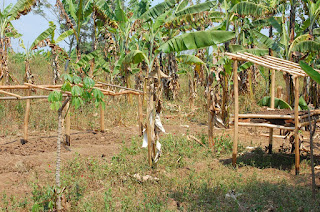


 We are now in the midst of putting my project into action, I’m getting my hands dirty and covered in calluses and I love it. Makes me feel like we’re really getting things done, building and creating, hopefully to create something lasting. After almost six weeks of living here, I am feel like I am finally beginning to put my project into action, yet I realize it has been a gradual process starting from the day I got here. The first step of the creation of my project was building relationships with the members of my organization and others in the community. I spent weeks just walking around learning about existence in the village. I learned how hard everyone works, especially the women in the community. Most women leave home early in the morning to go and tend to their farms where they cultivate everything from plantains to pineapples, then they come home around midday to prepare lunch, and in the afternoon go back to work in the farms or (as my host mother does) travel to town where they own shops, and then come back after dark to make dinner. I am continually impressed and inspired by the strength of these women and how they manage to raise a family in addition to all the work they do. Through my visits with members of my organization, I learned what their greatest struggles are, and the primary concern was simply the need for more income. When I asked how they thought they could achieve this, many answered: pigs. A few years back, the governmental organization for agriculture, NAADS (National Agricultural Advisory Services) came to Kayunga to implement a piggery project, enticing people with the idea of raising and selling pigs as a quick way to make money because they are in high demand in the market. Those who wanted them were given the pigs, yet this project had many shortcomings. Although the pigs have generated some income for those who own them, it is hard for people in the village to afford the pig feed and medications when they get sick. While pigs will eat just about anything, NAADS encouraged the use of high-protein feed that makes the pigs grow bigger faster, and now everyone wants to use this specialized feed. The problem with the feed is that it is very expensive, and everyone who owns pigs expressed to me that coming up with the money to pay for pig feed is one of their main concerns. I am finding this is a reoccurring theme in places such as my village: there is an introduction of methods that are enticing, yet cannot be sustained due to a lack of money or local resources. Along that same vein, another need expressed to me was for modern fertilizers, pesticides, and hybrid seeds to increase agricultural yields. The use of chemical fertilizers and pesticides and genetically modified seeds was introduced by NAADS as a way to grow bigger crops and more of them. Like the pig feed, the introduction of these commercial products entices people with the promise of increased yields and therefore increased income, cultivating a desire, yet most cannot afford to buy them. Furthermore, the negative impacts of these products are largely unknown, as they are not required to have a warning label. In the uS we are beginning to become aware of the harmful effects of chemical fertilizers, pesticides, and GMOs on our bodies and the earth, but in developing countries these negative effects are still widely unknown. I discussed this with Miss Claire, Joseph’s mother and a member of Bakusekamajja, after she too expressed a need for modern fertilizers and high-yield seeds. When I asked if she had been told of any potential drawbacks from using them, she only commented on the high price of buying such products. After I explained how chemicals degrade the soil making it even less fertile than it was before, as well as the health risks associated with using synthetic fertilizers and consuming produce grown with them, she became concerned and said she had no idea there were any disadvantages to their use. Is it coincidence that American corporations such as Monsanto are turning to developing countries to promote these products under the enticing guise of being “modern” methods of farming, countries where words like “modern” and “industrialized” are highly esteemed? Are we not just pawning off these products to our neighbors in the developing world who we keep blinded from the facts of their potential harm? I had now discovered the goal of my project: to learn about the agricultural techniques that work in harmony with the ecology of the region, and to encourage their use as efficient and economically viable methods as opposed to the popularized commercial alternatives. The sustainable approach to farming is often referred to as “alternative agriculture”, yet in truth it is the traditional form of agriculture that has fed people for thousands of years—the industrialized model is the alternative.


Comments
Post a Comment