in the beginning...
We have electricity.
How can something so many see as a blessing feel to me like such a curse? For the last four and a half weeks I have been living without power in my new home in the village of Kayunga, finding joy in the simple wonders of that kind of existence… bathing by moonlight, eating and reading by the glow of kerosene lanterns, a deck of cards and an old radio that we must hold together to keep the batteries from falling our only sources of entertainment. Now I live in a different world. I walked in to the house for lunch today to find the television on for the first time. Our daily lunch always filled with much conversation and laughter was now replaced with Judge Penny’s Family Court. Dinner too, has been electrically supplemented with Latin soap operas instead of local music on the radio. Where there was once the warm glow of lamp light in the house after dark, there is now the harsh light of fluorescent bulbs. It is not only the presence of electricity that feels different, but now I that I have settled in to life here and started my project, I feel like I am entering a new chapter of my time here. With just one month left before I leave, I feel there is no better time than now to put into writing my reflections on the first half of my experience here before it becomes just a fantasy of my memory.I arrived in Masaka, Uganda at the end of May, and shortly thereafter was placed in a village called Kayunga outside of Masaka. I am working as an intern for a community-based organization called Bakusekamajja Women’s Organization. In Luganda, Bakusekamajja means when a woman sets out to do something extraordinary that no one thinks she can achieve, but she keeps on persevering and succeeds. Isn’t it beautiful how one word can mean so much? It is a fitting name for this organization, a group of 28 women in the village who came together just over a year and a half ago to create a lending pool that they all contribute dues to once a week, and then give out loans to members for things such as school fees for their children, business establishment, and personal projects. As an intern for the Foundation for Sustainable Development (FSD), which is based in San Francisco, I have been placed with Bakusekamajja to work with them and develop a “sustainable development” project. More on my thoughts about sustainable development to come in a later entry, as I have found it to be a complex issue that I struggle with defining every day of my work.
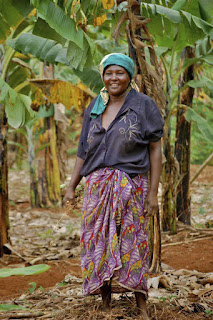 I am living in Kayunga with a wonderful host family of a mother, father, and five siblings, yet at the moment it is just me and my mama, Teo, and our houseboy Lawrence at home. My host father works as a veterinarian near Kampala, and only comes home occasionally on the weekends. My siblings range in age from 14 to 24, and they are all in boarding school or attending university right now except for my oldest brother who is a “struggling artist” as he calls himself, trying to establish himself as a musician in Kampala writing and performing music that is a mix of local Ugandan, rap, and reggae. My sister Dora, who is my age and fast became my close friend, was living at home with us until just a few days ago, but is now staying at a farm near Masaka doing veterinary training and will only be coming home on the weekends. It now feels like my family consists of my mama, my supervisor, Joseph, and all the women of my organization who have welcomed me into the village and their homes.
FSD requires that every intern has a supervisor within our local organizations, and Joseph has been appointed as mine. Bakusekamajja is a relatively new organization, just becoming established and recognized as an official community-based NGO. Since all the members are hard-working women who are busy all day long farming, cooking, working in their shops, and caring for their families, none of them were able to devote any time to being an intern supervisor. One of the members offered her son Joseph, a 19 year old on break for the Summer before he begins university in September, to take the position. I’ll be honest, the first time I met Joseph, who looks like he’s about 13, I was a little apprehensive about this kid being the one to give me guidance on my project for the next two months. But soon after spending some time with him, and realizing that even though he is still very much a kid, he does take his responsibility to both me and the organization seriously, and has become my closest companion and most valuable resource throughout the development of my project.As someone who prefers spontaneity to schedule, I am grateful that my work is something new and often unexpected every day. Yet the rest of my day has become a rhythmic ritual that I have come to love. I awake in the mornings at 6:30 sharp to the sound of my mama and Dora (now just mama) murmuring their morning prayers in the next room. I usually fall back asleep after this for another hour until all the sounds of the morning—the radio playing, birds singing, and chickens crowing—call me out of bed. I take my bucket and bar of soap to the showering area behind our house, stopping by the kitchen out back where I find my mother bent over the fire, warming water for bathing. We go through our morning greetings in Luganda, which are the same everyday, but always a delightful way to start the day. Greetings here can be very long, never confined to just a simple “Hello” unless you happen to be passing a stranger on the road, and even then you should at least ask how they are doing. After showering (lathering up with soap and splashing some water on myself) I go back inside to a breakfast of porridge, eggs from our chickens, avocado, and tea with milk from the goat farm across the road. While I eat breakfast, my mom leaves to go work on the family farm which is in the next village over. She produces bananas, plantains, cassava, yams, and ground nuts (similar to peanuts) all of which are staples in most of our meals. Joseph often joins me for breakfast because he is often left home alone, and since my arrival, my mama has made him a sort of adopted son. After breakfast, Joseph and I hike up the path to our office in the middle of the village, stopping along the way for hugs from the adorable little girls who always run out to see me when I walk by, and to greet any other neighbors we see along the way. At the office, which is a term I use very loosely to refer to the small cool concrete room which is mainly used for storing supplies and for occasional shelter from the hot midday sun, we make a game-plan for the day. For the first couple weeks I was here, the daily routine was making visits to the homes of the members of Bakusekamajja, to conduct a needs assessment to determine what type of project we could embark on that will satisfy what they want and need the most. After about five minutes of greeting, and taking whatever customary offering to visitors they gave to us, from bananas to biscuits to pineapples, I would have a conversation with the women (translated through Joseph) about their lives, how they make a living, and what they feel are their greatest needs right now, as well as the needs of the organization. It is frustrating to not be able to communicate with the women directly other than with the Luganda I know, which is currently limited to greetings and simple conversation, but I have found that even with that, with just trying to use Luganda as much as possible, they are appreciative of the effort and have come to see me as one of their neighbors, a fellow member, and a friend.
How can something so many see as a blessing feel to me like such a curse? For the last four and a half weeks I have been living without power in my new home in the village of Kayunga, finding joy in the simple wonders of that kind of existence… bathing by moonlight, eating and reading by the glow of kerosene lanterns, a deck of cards and an old radio that we must hold together to keep the batteries from falling our only sources of entertainment. Now I live in a different world. I walked in to the house for lunch today to find the television on for the first time. Our daily lunch always filled with much conversation and laughter was now replaced with Judge Penny’s Family Court. Dinner too, has been electrically supplemented with Latin soap operas instead of local music on the radio. Where there was once the warm glow of lamp light in the house after dark, there is now the harsh light of fluorescent bulbs. It is not only the presence of electricity that feels different, but now I that I have settled in to life here and started my project, I feel like I am entering a new chapter of my time here. With just one month left before I leave, I feel there is no better time than now to put into writing my reflections on the first half of my experience here before it becomes just a fantasy of my memory.I arrived in Masaka, Uganda at the end of May, and shortly thereafter was placed in a village called Kayunga outside of Masaka. I am working as an intern for a community-based organization called Bakusekamajja Women’s Organization. In Luganda, Bakusekamajja means when a woman sets out to do something extraordinary that no one thinks she can achieve, but she keeps on persevering and succeeds. Isn’t it beautiful how one word can mean so much? It is a fitting name for this organization, a group of 28 women in the village who came together just over a year and a half ago to create a lending pool that they all contribute dues to once a week, and then give out loans to members for things such as school fees for their children, business establishment, and personal projects. As an intern for the Foundation for Sustainable Development (FSD), which is based in San Francisco, I have been placed with Bakusekamajja to work with them and develop a “sustainable development” project. More on my thoughts about sustainable development to come in a later entry, as I have found it to be a complex issue that I struggle with defining every day of my work.
 I am living in Kayunga with a wonderful host family of a mother, father, and five siblings, yet at the moment it is just me and my mama, Teo, and our houseboy Lawrence at home. My host father works as a veterinarian near Kampala, and only comes home occasionally on the weekends. My siblings range in age from 14 to 24, and they are all in boarding school or attending university right now except for my oldest brother who is a “struggling artist” as he calls himself, trying to establish himself as a musician in Kampala writing and performing music that is a mix of local Ugandan, rap, and reggae. My sister Dora, who is my age and fast became my close friend, was living at home with us until just a few days ago, but is now staying at a farm near Masaka doing veterinary training and will only be coming home on the weekends. It now feels like my family consists of my mama, my supervisor, Joseph, and all the women of my organization who have welcomed me into the village and their homes.
FSD requires that every intern has a supervisor within our local organizations, and Joseph has been appointed as mine. Bakusekamajja is a relatively new organization, just becoming established and recognized as an official community-based NGO. Since all the members are hard-working women who are busy all day long farming, cooking, working in their shops, and caring for their families, none of them were able to devote any time to being an intern supervisor. One of the members offered her son Joseph, a 19 year old on break for the Summer before he begins university in September, to take the position. I’ll be honest, the first time I met Joseph, who looks like he’s about 13, I was a little apprehensive about this kid being the one to give me guidance on my project for the next two months. But soon after spending some time with him, and realizing that even though he is still very much a kid, he does take his responsibility to both me and the organization seriously, and has become my closest companion and most valuable resource throughout the development of my project.As someone who prefers spontaneity to schedule, I am grateful that my work is something new and often unexpected every day. Yet the rest of my day has become a rhythmic ritual that I have come to love. I awake in the mornings at 6:30 sharp to the sound of my mama and Dora (now just mama) murmuring their morning prayers in the next room. I usually fall back asleep after this for another hour until all the sounds of the morning—the radio playing, birds singing, and chickens crowing—call me out of bed. I take my bucket and bar of soap to the showering area behind our house, stopping by the kitchen out back where I find my mother bent over the fire, warming water for bathing. We go through our morning greetings in Luganda, which are the same everyday, but always a delightful way to start the day. Greetings here can be very long, never confined to just a simple “Hello” unless you happen to be passing a stranger on the road, and even then you should at least ask how they are doing. After showering (lathering up with soap and splashing some water on myself) I go back inside to a breakfast of porridge, eggs from our chickens, avocado, and tea with milk from the goat farm across the road. While I eat breakfast, my mom leaves to go work on the family farm which is in the next village over. She produces bananas, plantains, cassava, yams, and ground nuts (similar to peanuts) all of which are staples in most of our meals. Joseph often joins me for breakfast because he is often left home alone, and since my arrival, my mama has made him a sort of adopted son. After breakfast, Joseph and I hike up the path to our office in the middle of the village, stopping along the way for hugs from the adorable little girls who always run out to see me when I walk by, and to greet any other neighbors we see along the way. At the office, which is a term I use very loosely to refer to the small cool concrete room which is mainly used for storing supplies and for occasional shelter from the hot midday sun, we make a game-plan for the day. For the first couple weeks I was here, the daily routine was making visits to the homes of the members of Bakusekamajja, to conduct a needs assessment to determine what type of project we could embark on that will satisfy what they want and need the most. After about five minutes of greeting, and taking whatever customary offering to visitors they gave to us, from bananas to biscuits to pineapples, I would have a conversation with the women (translated through Joseph) about their lives, how they make a living, and what they feel are their greatest needs right now, as well as the needs of the organization. It is frustrating to not be able to communicate with the women directly other than with the Luganda I know, which is currently limited to greetings and simple conversation, but I have found that even with that, with just trying to use Luganda as much as possible, they are appreciative of the effort and have come to see me as one of their neighbors, a fellow member, and a friend.

Comments
Post a Comment